
Second Doctoral Colloquium: Strengthening connections through collaborative exchange and expert guidance
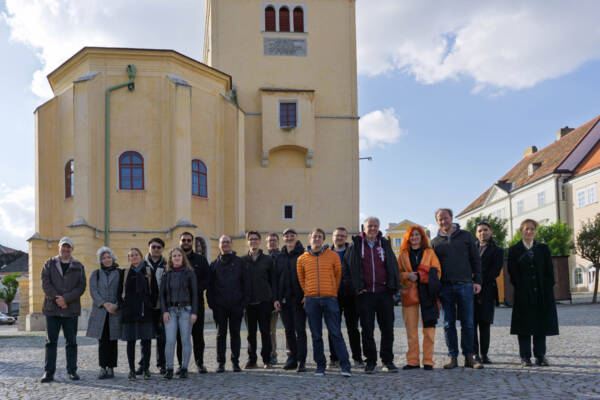
Left to right: Markus Seidl, Franziska Proksa, Manuela Waldner, Tingyu Lin, Michaela Tuscher, Nidham Tekaya, Gerik Scheuermann (University of Leipzig), Florian Kibler, Michael Loebenstein (Austrian Film Museum), Wolfgang Aigner, Erwin Feyersinger (University Tübingen), Claudius Stemmler (University Tübingen), Robert Sablatnig, Silvia Miksch, Florian Kleber, Anna Högner (Austrian Film Museum)
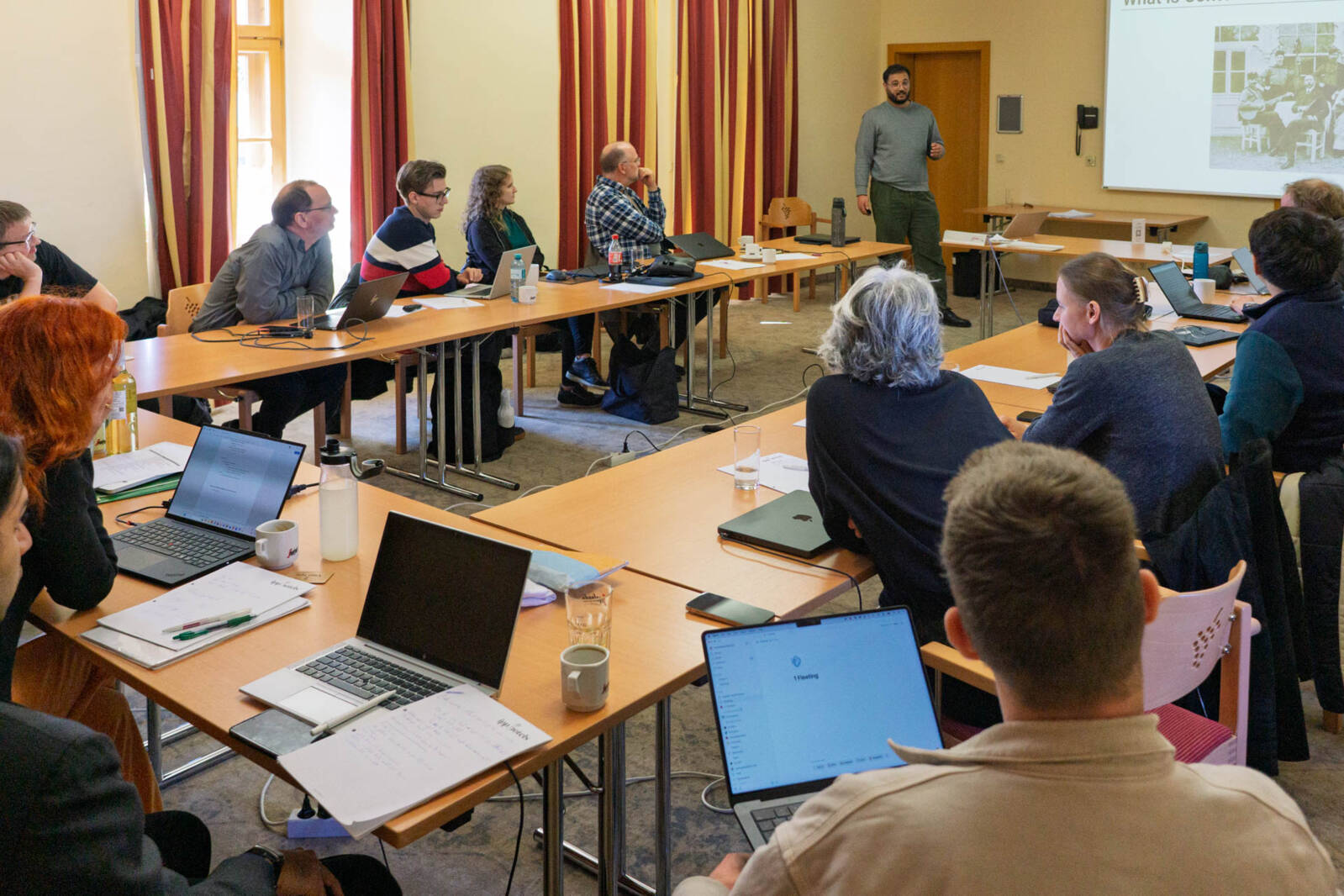
The second Visual Heritage Doctoral Colloquium took place October 2-3, 2025, in the historic wine town of Retz in Lower Austria. The Althof Retz Landgut & Spa provided an inspiring setting for the colloquium that brought together PhD students, core faculty, advisory board members, and external experts to discuss and advance research at the intersection of visual computing and cultural heritage. Over two intensive days, participants engaged in deep discussions, collaborative workshops, and knowledge exchange that strengthened both individual research trajectories and collective understanding across disciplines.
The town of Retz, with its rich history and unique cultural heritage, offered more than just a picturesque backdrop. Participants had the opportunity to explore Austria's largest historic wine cellar system, adding a tangible cultural heritage experience to the academic discussions.
Day 1: Status Reports and Domain Insights
The first day began with a welcome and introduction of the agenda by Wolfgang Aigner, followed by a brief introduction round led by Markus Seidl. The day was structured to maximize interaction between PhD students and domain experts through a combination of status reports and intensive work sessions. Each PhD work session followed a structured format: a 15-minute presentation covering motivation, research questions, current status, and demos of their recent published work, followed by 45 minutes of intensive discussion and collaborative problem-solving in plenum.
The morning featured work sessions with Armin Dadras presenting his research on image compositions and content prediction, followed by an invited talk from Michael Loebenstein and Anna Högner from the Austrian Film Museum. Their presentation, "Cooking with Water - Archives Wrangling Cultural Heritage Data," provided valuable insights into the newly structured archive system at the Film Museum, highlighting how improved organization has enabled more efficient access to valuable cultural data. This presentation resonated strongly with several PhD students whose research relies on cultural heritage datasets.
Markus Passecker continued with his status report on situated and immersive storytelling, followed by Tingyu (Timmy) Lin's presentation on intent analysis in images and videos. Each session provided insights into the topics and addressed the cultural heritage domain problems and data sources used.
Day 2: Deep Collaboration and Workshop Synthesis
The second day opened with Silvia Miksch's welcome and an invited talk by Gerik Scheuermann from the University of Leipzig. His presentation on "Distant Viewing of Medieval Bibles - Towards Computational Iconography" offered fascinating perspectives on applying computational methods to historical visual analysis, sparking lively discussion about methodological approaches across different heritage domains.
Michaela Tuscher presented her work on relationship analysis with a focus on art history, followed by another invited talk from external experts Erwin Feyersinger and Claudius Stemmler from the University of Tübingen. Their presentation, "The Scholar in the Loop: The Challenges of Ambiguity in Film," provided new insights into the interpretive challenges inherent in film analysis and the role of human expertise in computational workflows. This perspective proved particularly valuable for PhD students working on automated analysis methods.
Nidham Tekaya's work session on visual context analysis and how it evolves over time offered many insights, rounding out the individual presentations.
Data Resources and Interdisciplinary Collaboration
Following the lunch break, Franziska Proksa led a comprehensive Data & Use Cases Session. This session provided an overview of various cultural archives and datasets, including the Prater and Anivision collections, along with unsolved domain problems. The discussion and brainstorming that followed helped identify new data resources and research gaps that could benefit the entire group.
A key innovation of the second colloquium was the dedicated session led by Manuela Waldner on "Overview of relationships / cooperation possibilities between topics." This workshop focused on capturing the big picture and systematically exploring collaboration opportunities between the different PhD topics. The session successfully identified several promising areas for interdisciplinary cooperation and helped participants understand how their individual research questions connect to the broader goals of the Visual Heritage program.
The colloquium achieved notable success in establishing new collaborations between PhD students and with domain experts. These partnerships are expected to enhance both the individual research trajectories and the collective impact of the program.
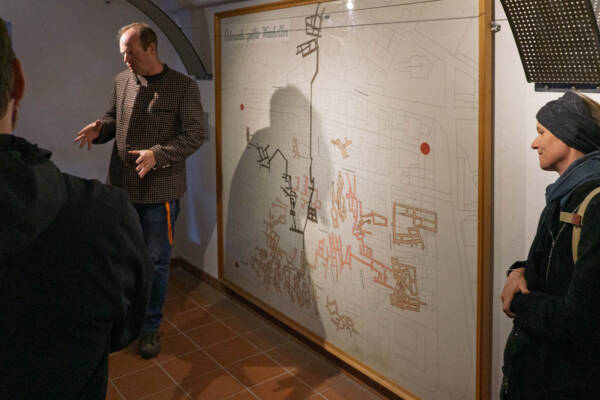
Participants receive expert guidance through the historic wine cellar tunnels beneath Retz
Cultural and Team-Building Activities
True to the Visual Heritage program's commitment to experiencing cultural heritage firsthand, participants explored the Retzer Erlebniskeller (Experience Cellar) on the first afternoon. This remarkable site is Austria's largest historic wine cellar, featuring an extensive labyrinth of tunnels stretching approximately 20 kilometers beneath the town center. Dating back to 1279, these cellars were carved up to 20 meters deep into sandy sediment across three levels, creating a hidden layer of cultural heritage beneath the visible townscape.
The guided tour brought participants through centuries-old passages that witnessed many chapters of European history, from medieval wine merchants and devastating invasions to times of displacement and return. The tour also revealed that wine from these cellars was served at the signing of the Austrian State Treaty in 1955, connecting the underground heritage site to the founding moment of modern Austria. The atmospheric setting provided a perfect backdrop for team-building and sparked informal conversations about how history is preserved, accessed, and brought to life.
Looking Ahead
The colloquium concluded with a comprehensive wrap-up session led by Robert Sablatnig, where participants shared feedback and discussed future planning. The event successfully met all four of its primary goals: participants gained improved understanding and structure for their research topics, advisory board members and domain experts provided valuable feedback, new data resources and research gaps were identified, and most importantly, collaborative projects and partnerships were initiated among PhD students and with domain experts.
The second Visual Heritage Doctoral Colloquium demonstrated the program's maturation, with increasingly sophisticated research presentations, deeper interdisciplinary dialogue, and stronger connections between computational approaches and cultural heritage challenges. The foundations laid during these two days in Retz promise to strengthen both individual dissertations and the collective advancement of visual heritage research.